ArticlesAnalysis
They do not have to say “Jews”: how proxy language rebuilds antisemitism
How “globalist,” “Zionist,” Soros, and “the lobby” can carry old accusations of Jewish control, disloyalty, and social corruption without using the word Jew.
About 10 min read
Antisemitism did not disappear when saying "the Jews" became disreputable. It learned safer nouns.
"Globalist," "Zionist," "Soros," "financier," and "the lobby" can describe real people, ideas, and institutions. They become antisemitic proxies when a Jewish target is cast as a secret, borderless force that captures governments, corrupts society, divides the public, or belongs outside the nation. At that point, "I never said Jews" is not a defense. The old accusation is doing the same work under a safer name.
TL;DR
Criticism of billionaires, Zionism, Israel, AIPAC, foreign influence, or international institutions is not antisemitic by definition. It crosses the line when it turns Jews or Jewish-associated institutions into one coordinated force operating behind democracy: secretly installing officials, manufacturing protest, controlling war, dividing citizens, or demanding loyalty to an alien power.
That distinction is not semantic caution. It is how antisemitism survives public disgrace. The noun changes while the plot remains: an alien Jewish power manipulates ordinary people from within. Historically, that plot did not remain speech. It made exclusion look like self-defense and repression look like national protection.
The proxy becomes visible when exclusion begins
In March 2025, Rabbi Ari Jun was scheduled to speak at a Cincinnati rally against neo-Nazis. Organizers removed him. The reason was not anything he planned to say about the rally's subject. One organizer told the Jewish Telegraphic Agency that Jun was a known Zionist and that allowing Zionists to participate would undermine the demonstration.
"Rabbi Ari Jun is a well-known Zionist, and while this event is intended to oppose Nazis and white supremacy, allowing Zionists to participate undermines the original goal of the demonstration."
(Queen City United organizer, quoted by JTA, March 2025)
That is not a dispute over an Israeli bill, military operation, settlement, or minister. "Zionist" functioned as a disqualifying identity. A rabbi was told that his presence contaminated an unrelated civic action against Nazis. The organizers denied excluding him because he was Jewish; the proxy allowed them to exclude a Jew while describing the act as a disagreement about values.
This is why proxy language matters. The danger is not that a forbidden syllable was spoken. The danger is that an elastic political label can mark Jewish people and institutions as morally untouchable, then make their removal from public life sound principled.
Political disagreement
Oppose a defined Israeli policy, AIPAC expenditure, candidate endorsement, or theory of nationalism.
The claim identifies conduct and remains open to evidence.
Proxy exclusion
Declare a Jew or Jewish organization unfit for unrelated civic life because it is "Zionist."
The label becomes collective guilt and a condition of belonging.
How the modern proxies work
Soros: one Jewish financier made responsible for everything
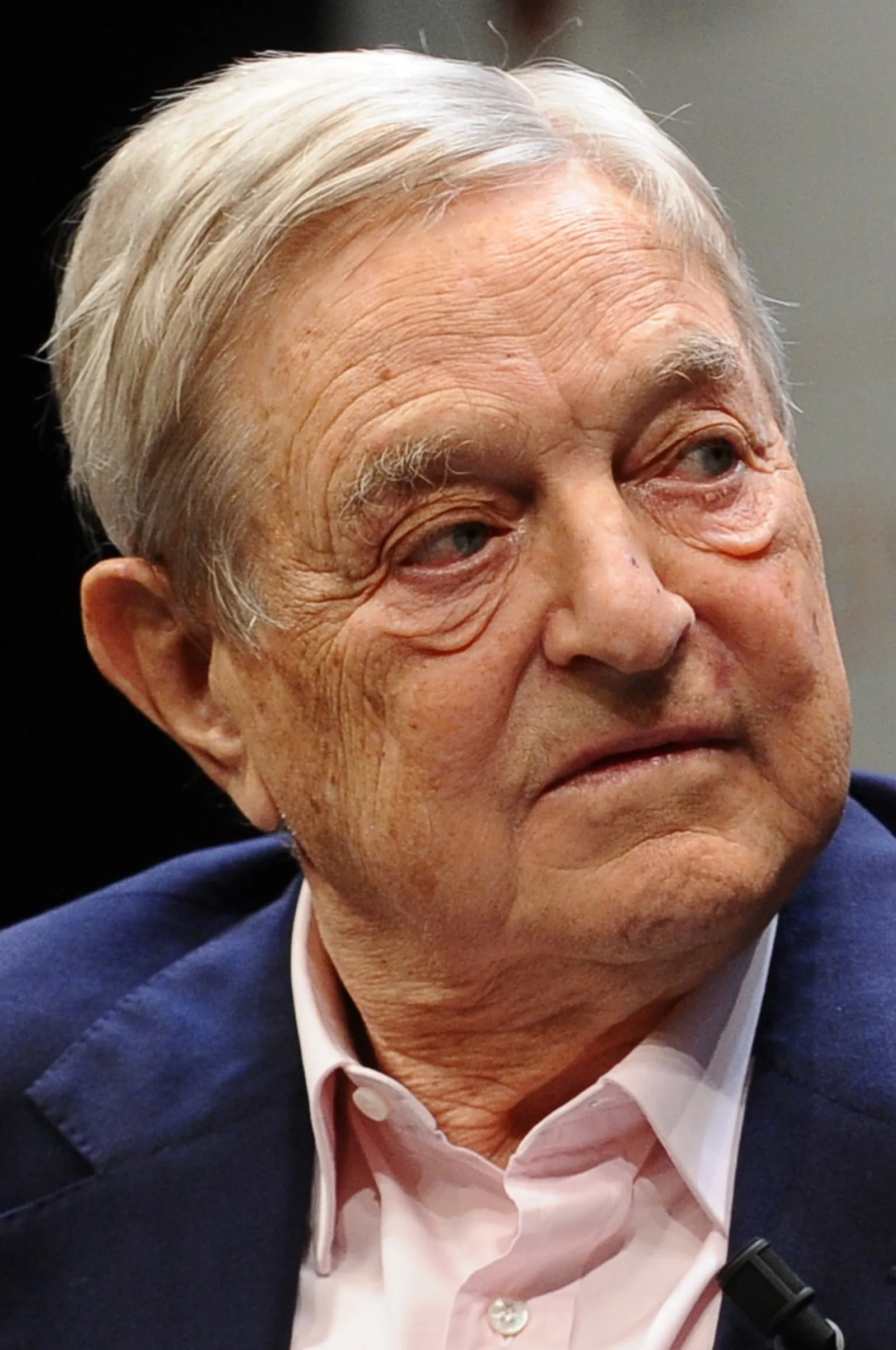
George Soros is a billionaire who funds political causes. His grants, organizations, and influence are legitimate subjects for reporting and criticism. The conspiracy begins when evidence about particular grants is replaced by a total story in which Soros secretly installs prosecutors, manufactures protests, directs migration, controls elections, or destabilizes entire countries.
The Anti-Defamation League's review of Soros conspiracy theories documents how those stories reproduce the puppet-master myth: a rich and powerful Jew operating behind events that the public falsely believes arose through ordinary politics. The objection is not that Soros is Jewish and therefore immune from criticism. It is that a named Jewish donor becomes an all-purpose hidden cause.
"Globalist": foreignness attached to a Jewish target
"Globalist" can neutrally describe support for cross-border institutions or economic integration. In antisemitic politics, it marks Jews as rootless people whose international connections make them disloyal to the country where they live. Context decides which meaning is operating.
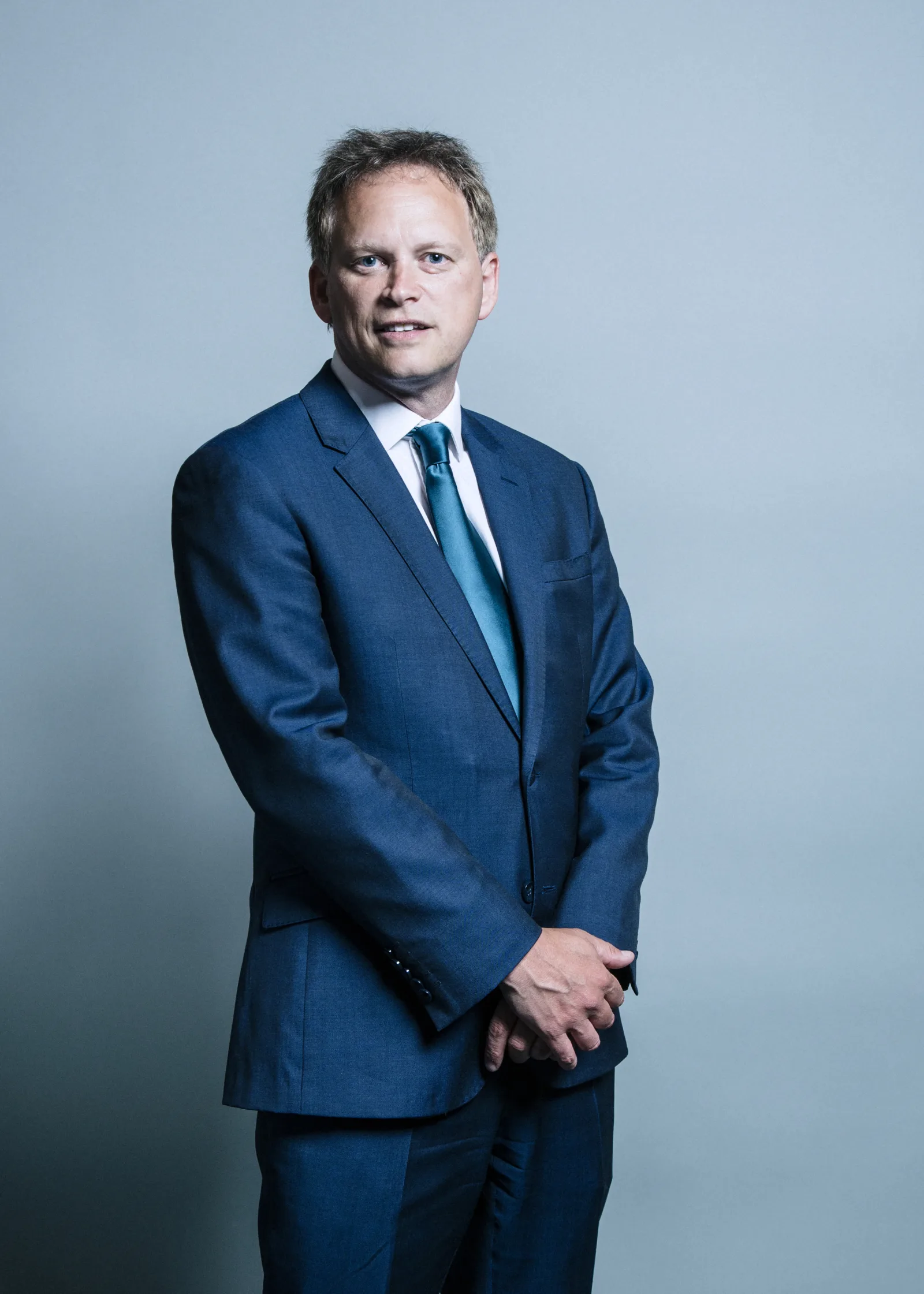
After Grant Shapps, who is Jewish, became Britain's home secretary in October 2022, Nigel Farage and other commentators described him as a "globalist" while presenting his appointment as part of a takeover of Liz Truss's government. The Guardian reported that Jewish organizations objected specifically to joining a Jewish target, a takeover narrative, and a term long used for international Jewish power.
AIPAC: a real organization attacked through an old plot
AIPAC is not a code word by itself. It is a political organization with spending, donors, positions, allies, and opponents. Our article on Mamdani and the politics of Jewish power examines what happens when criticism of that organization is assembled from "monsters," "dark money," preserved power, and an outsider "they" turning "us" against one another.
The finding does not depend on reading a politician's mind. It depends on the public sentence. Secrecy supplies hidden power; "they" supplies the alien faction; social division supplies internal sabotage; monsters supplies dehumanization. An actual organization can be criticized through the architecture of an antisemitic conspiracy.
The nouns change; the plot survives
The Protocols of the Elders of Zion claimed to reveal Jewish plans to control politics, finance, media, education, and religion. It was a forgery. Its exposure did not destroy its usefulness because conspiracy stories are not sustained by proof. They are sustained by the promise that one hidden group explains everything.
Nazi propaganda inherited that structure. The United States Holocaust Memorial Museum documents portrayals of Jews as an alien race that seized the economy, poisoned culture, enslaved workers, and conspired behind enemy powers. In January 1939, Hitler blamed "international Jewish financiers" for a future world war and paired that accusation with a threat of annihilation.
The historical lesson is not that every complaint about finance leads to genocide. It is that conspiracy rhetoric changes the moral position of the target. If Jews are political opponents, they retain rights. If they are a hidden power enslaving the nation, removing them can be sold as liberation. Suspicion creates permission; permission makes exclusion easier; a state can then turn exclusion into policy.
The Soviet Union proved that the substitute word was enough
Postwar Soviet propaganda supplied the clearest test of proxy language. The state officially condemned racial antisemitism. It also attacked "rootless cosmopolitans" and later "Zionists" as disloyal, conspiratorial, imperialist, and hostile to Soviet society. The vocabulary sounded political. The population marked by it was overwhelmingly Jewish.
The campaign was not confined to speeches. Jewish cultural and religious life was suppressed. Jews seeking to emigrate were denied permission, dismissed from work, harassed, and arrested. In 1983, the Communist Party created the Anti-Zionist Committee of the Soviet Public as the movement for Jewish emigration grew. The YIVO Encyclopedia documents that the committee was supervised by the party's Propaganda Department and approved by the KGB.
Soviet anti-Zionism demonstrates the full mechanism. The state denied that a Jewish problem existed. It called repression an ideological struggle against Zionism. It recruited prominent Jews to validate the campaign. Then it punished Jewish people for culture, association, emigration, and alleged foreign loyalty. The proxy did not hide the consequences from the people living them.
A direct test for proxy antisemitism
Do not ask only whether the speaker said "Jew." Ask what the sentence makes its audience believe and do.
- Target: Does the label repeatedly land on Jews, Jewish institutions, or Jewish civic participation?
- Coordination: Are different people and organizations collapsed into one purposeful network?
- Control: Are elected officials and citizens reduced to puppets of that network?
- Foreignness: Is the target described as global, rootless, disloyal, or outside the legitimate public?
- Total explanation: Does one Jewish-associated force supposedly explain war, migration, protest, media, elections, and social conflict?
- Collective penalty: Are people excluded or suspected because of identity or association rather than individual conduct?
One element alone may support several interpretations. The combination supplies the verdict. A defined policy argument names conduct and evidence. A proxy conspiracy names a suspect group, grants it hidden power, and asks the public to defend itself from that group.
The word is political
"I oppose Zionism because I oppose all ethnic nationalism."
"AIPAC spent this amount through this committee in this election."
"Soros funded this named organization through this disclosed grant."
The function is antisemitic
"Zionists cannot belong in this unrelated civic coalition."
"The lobby secretly controls our leaders and turns us against one another."
"Soros installed the officials and manufactured the protests."
Selected sources
Contemporary cases first, followed by institutional and historical sources on conspiracy propaganda, proxy language, and Soviet anti-Zionism.
- JTA: Cincinnati rabbi disinvited from anti-Nazi rallyDocuments the explicit decision to exclude Rabbi Ari Jun because organizers identified him as a Zionist.
- ADL: Antisemitism behind George Soros conspiracy theoriesDistinguishes criticism of Soros from puppet-master claims that make a Jewish donor the hidden cause of political events.
- The Guardian: Farage, Grant Shapps, and “globalist”Reports the use of takeover language and “globalist” after the appointment of a Jewish cabinet minister.
- ADL Center on Extremism: “Globalist”Explains neutral and extremist uses of the term and its role as a code word for disloyal Jewish power.
- USHMM: The Protocols of the Elders of ZionDocuments the forgery and its claims about Jewish control of politics, finance, media, education, and war.
- USHMM: Defining the EnemyDocuments Nazi portrayals of Jews as an alien conspiratorial force and Hitler’s 1939 financiers accusation.
- YIVO Encyclopedia: Anti-Zionist Committee of the Soviet PublicDocuments the committee’s creation, propaganda purpose, party supervision, and KGB approval.
- Christian Science Monitor: Soviet refuseniks treated as criminalsContemporary reporting on employment loss, harassment, arrest, and anti-Zionist committees targeting Jewish life.
- Journal of Contemporary Antisemitism: Soviet conspiracist anti-ZionismScholarly account of Soviet efforts to depict Zionists as a disloyal conspiracy and transfer those narratives abroad.
- Related article: Mamdani and the politics of Jewish powerApplies the hidden-power and outsider-within test to a contemporary AIPAC attack.
- Related article: When “Zionist” becomes a slurFocuses on when a political term becomes collective blame for Jews and Jewish institutions.
- Related article: Israel-support purity testsExamines dual-loyalty accusations and ideological exclusion from unrelated civic life.
- Old Story: Hidden controlOur explainer on the claim that Jews secretly control governments, finance, media, or war.
- Old Story: Dual loyaltyOur explainer on treating Jews as an alien faction loyal to a foreign power.