ArticlesAnalysis
New words, old accusations: Mamdani and the politics of Jewish power
Criticizing AIPAC is legitimate. Mamdani's AIPAC formulation was antisemitic rhetoric, and his first defense of "globalize the intifada" failed Jewish New Yorkers. The evidence, the historical pattern, and the verdict.
About 14 min read
AIPAC is a political organization. It can be investigated, opposed, defeated, and criticized. None of that is antisemitic by itself.
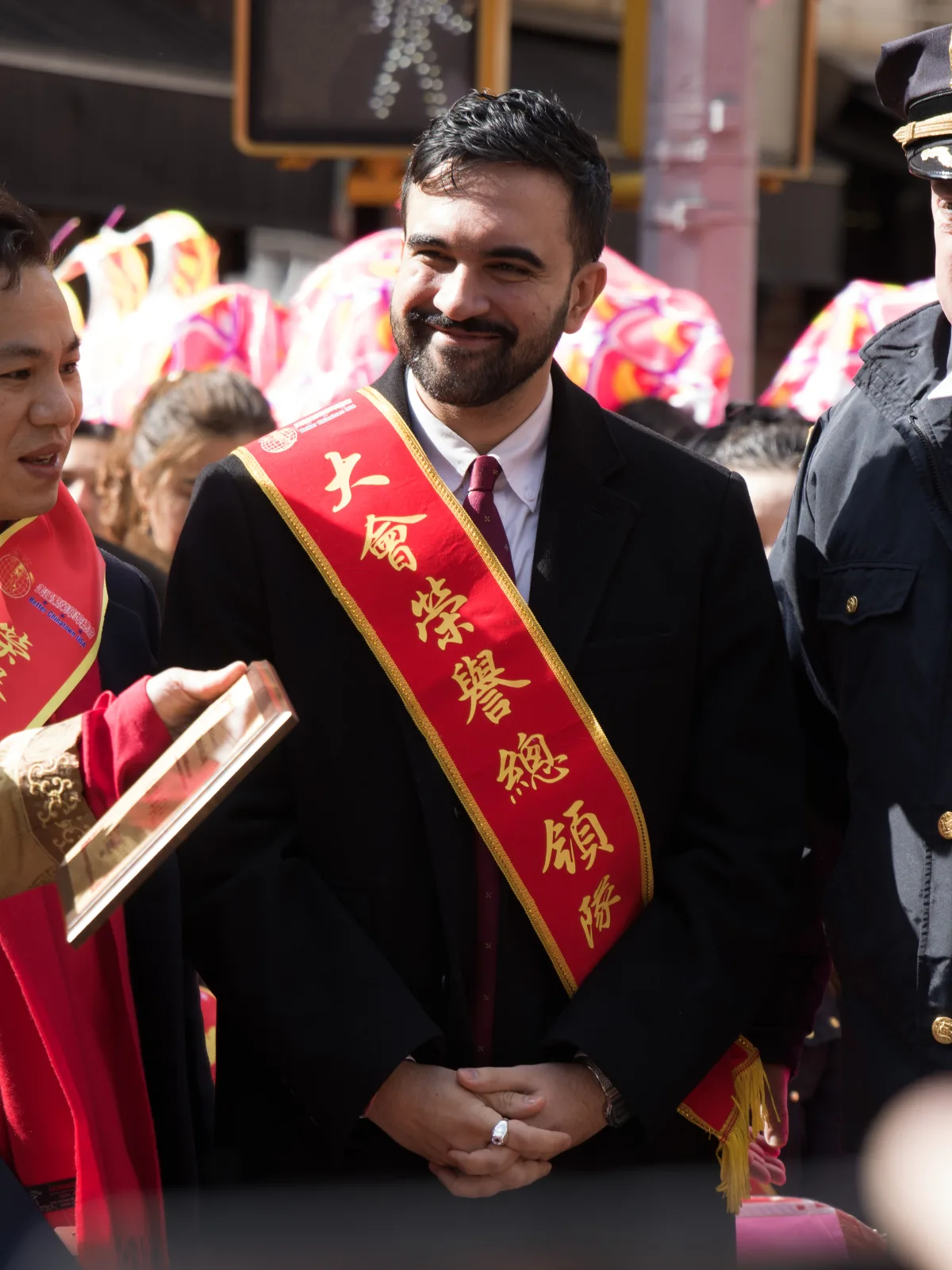
At a June 18 rally, New York Mayor Zohran Mamdani listed AIPAC among several political forces he called "monsters." He accused it of moving "millions in dark money" to "preserve their power" and "turn us against one another." Some Jewish leaders, including Mamdani allies and AIPAC critics, warned him. The sentence joined hidden-power language, dehumanization, and an outsider "they" corrupting the legitimate "us." That combination crossed into antisemitic rhetoric. Mamdani's intended target was AIPAC; intent does not erase the public structure of the accusation.
TL;DR
The weak argument says that criticizing AIPAC is antisemitic because AIPAC advocates for Israel and many of its supporters are Jewish. That standard would make ordinary political accountability impossible. Lobbying groups and super PACs exercise power. Journalists and politicians should follow the money and challenge their claims.
The decisive argument is about how Mamdani chose to do it. He did not merely say that a registered super PAC spent a stated sum in a stated race. He combined claims about opaque funding with the language of monsters, preserved power, and an outsider "they" turning "us" against one another. That last contrast matters. It places the targeted pro-Israel force outside the public it supposedly manipulates: not a political opponent within democracy, but a hostile force acting upon it. That is the hidden-control and outsider-within story in contemporary political language. When Jewish allies as well as longtime AIPAC critics warned him, he defended the wording.
What Mamdani actually said
At a June 18, 2026 rally for progressive candidates in Brooklyn, Mamdani invoked a popular paraphrase commonly, but inaccurately, presented as a direct quotation from Italian Marxist thinker Antonio Gramsci: "Now is the time of monsters." According to CNN's report and quotation of the speech, he described the "monsters" as including groups funding television advertisements against candidates he supported. He then singled out AIPAC.
"They move millions in dark money to accomplish a single goal, to preserve their power, so that they can turn us against one another, instead of our leaders turning towards the moral change we all know to be necessary."
(Zohran Mamdani, Brooklyn rally, June 18, 2026, as quoted by CNN)
Mamdani also said AIPAC feared "democracy being allowed to run its course" and "an end to genocide and Netanyahu's wars." When reporters asked whether "monsters" and "dark money" invoked antisemitic tropes, he did not apologize. He said the term applied broadly to super PACs and others preventing the birth of a new political world, not solely to AIPAC.
Mamdani was campaigning against outside spending in Democratic primaries. His slate included Jewish former New York City comptroller Brad Lander. That context matters, but it does not erase the words. AIPAC was the named organization, and Mamdani combined monsters, allegedly opaque money, preserved power, social division, and mass death abroad. His grammar divided the world into "they" and "us," casting AIPAC and its backers as a monstrous force acting upon the public rather than as a political opponent within democracy.
The campaign-finance critique is fair game
AIPAC and its affiliated super PAC, United Democracy Project, spend heavily in federal elections. The Federal Election Commission lists United Democracy Project as an independent-expenditure-only committee. CNN reported that United Democracy Project transferred $650,000 to another super PAC supporting one of the incumbents opposed by Mamdani. That transfer became public before New York's June 23 primary.
Mamdani also referred more broadly to money routed through organizations whose funders become clear only after an election. That description fits documented AIPAC-linked spending in the 2026 Illinois primaries. The Brennan Center for Justice reported that AIPAC funneled more than $5 million to two groups whose federal fundraising reports were not due until after voters cast their ballots.
"Dark money" generally means political spending whose ultimate source is not disclosed. United Democracy Project reports its immediate donors, but a super PAC can still receive money from donor-concealing nonprofits or route funds through pass-through committees that delay useful disclosure. The record therefore includes both disclosed super PAC funding and documented efforts that left voters without timely information. Mamdani's underlying transparency concern was not invented, even if critics objected to the way he framed it.
A concrete campaign-finance case
Name the committee, amount, transfer, advertisement, filing, donor rule, and election affected.
The evidence can be checked and the same rule can be applied to every PAC.
A conspiratorial political story
Turn documented opacity into a total story about a monstrous pro-Israel force preserving its power and turning citizens against one another.
That language does more than explain a filing.
Rabbi Misha Shulman, a Mamdani supporter, made this distinction in the Jewish Telegraphic Agency. He called AIPAC's influence a legitimate subject of criticism but said the "dark money" framing invited traditional antisemitism into the conversation. Rabbi Jill Jacobs of T'ruah, another progressive critic of AIPAC, wrote that calling AIPAC and its backers "monsters" cast political opponents as less than human. Mamdani did not adopt either warning; he said "monsters" applied broadly to super PACs, which left the AIPAC-specific "they/us" frame intact.
The old story: secret money and hidden Jewish control
Antisemitism changes its nouns more easily than its plot. One of its most durable plots says that a small, concealed Jewish network controls finance, media, government, or war while ordinary people mistake the result for democratic choice. Our explainer on hidden control traces the pattern in more detail.
The most notorious version is The Protocols of the Elders of Zion. Encyclopaedia Britannica describes the text as a fabrication that presented supposed meeting minutes of Jewish leaders plotting to control politics, financial markets, media, education, and other institutions. It was exposed as fraudulent, but exposure did not stop its circulation.
Henry Ford gave the conspiracy an American megaphone
Beginning in 1920, Henry Ford's newspaper, The Dearborn Independent, published a series later collected as The International Jew. The Encyclopaedia Britannica documents that Ford used his prestige to spread lies about Jewish power over politics, economics, and media. The story told readers that an apparently open society was really being manipulated by a coordinated minority.
Father Coughlin updated it for radio
In the 1930s, Father Charles Coughlin reached tens of millions of listeners. The Encyclopaedia Britannica biography documents how he attacked "international bankers," widely understood by his audience to mean Jewish bankers, and published claims about Jewish financiers controlling world politics. He eventually promoted his own version of the Protocols.
The historical pattern is not simply "someone talked about money." Campaign finance is real, and wealthy interests really do influence politics. The pattern emerges when money is joined to a totalizing story: concealed actors preserve their power, corrupt democracy, divide the public, and produce suffering for their own ends.
The second old story: they are inside the country, but not of it
Antisemitic politics has rarely stopped at saying that Jews possess money. It says that Jewish power is alien: a state within the state, a coordinated minority whose interests are separate from the nation and whose presence breaks the nation's natural unity. That is the logic of the fifth-column charge. It turns neighbors into infiltrators and political disagreement into internal sabotage. Our explainer on dual loyalty traces that pattern.
The Dreyfus affair is a defining example. In 1894, French army captain Alfred Dreyfus was falsely convicted of spying for Germany. The accusation found a willing audience because many antisemites already believed a Jew could wear a French uniform without ever truly being French. Evidence became secondary to the prior story: Jews were a separate, disloyal body concealed inside the nation.
Mamdani did not accuse Jewish New Yorkers of treason, and AIPAC is an actual political organization rather than an ethnic group. His line about turning "us" against one another is therefore not a literal fifth-column accusation. It draws on the same outsider architecture: the targeted pro-Israel force stands outside "us" while manufacturing conflict within "us." Put beside "dark money," "preserve their power," and "monsters," the line does not merely criticize influence. It casts a Jewish-associated political force as an alien corrupter of the body politic.
How the frame works
Mamdani did not merely call AIPAC wrong. He portrayed it as an enemy of democracy that uses opaque funding to preserve power and turn Americans against one another. Each element does work: "dark money" supplies secrecy; "preserve their power" supplies domination; "turn us against one another" supplies internal subversion; and "monsters" makes the target less than human. The evidence supports serious criticism of AIPAC-linked spending and delayed disclosure. It does not justify that combined frame.
The IHRA working definition (European Commission overview) treats conspiratorial claims about collective Jewish control as a possible antisemitism example in context. Here the context is the full combination: secrecy, preserved power, subversion, and dehumanization, not the acronym "AIPAC" alone. That combination is what makes the rhetoric antisemitic.
AIPAC is not synonymous with Jews. It has Jewish and non-Jewish supporters, and Jewish Americans disagree sharply about it. That is why the verdict does not rest on naming AIPAC. It rests on attacking a Jewish-associated target through the combined architecture of secrecy, preserved power, social subversion, and dehumanization.
This is the same boundary discussed in our explainers on proxy language and when "Zionist" becomes a slur. A political label can describe a real position. It can also become a replacement noun carrying an older accusation.
His response to "globalize the intifada" failed too
This was not Mamdani's only failure to recognize rhetoric that carries a different meaning for Jewish New Yorkers than it does inside activist circles. When NBC News asked whether "globalize the intifada" made him uncomfortable, he declined to condemn it and described it as an expression of Palestinian equality. He also invoked the Arabic use of "intifada" for the Warsaw Ghetto Uprising.
"Exploiting the Museum and the Warsaw Ghetto Uprising to sanitize 'globalize the intifada' is outrageous and especially offensive to survivors."
(U.S. Holocaust Memorial Museum statement, quoted by NBC News)
The museum was right. Dictionary translation does not settle public meaning. The First and Second Intifadas are remembered by Jews through shootings, stabbings, suicide bombings, buses, restaurants, and murdered civilians. Adding "globalize" reasonably sounds like carrying that violence elsewhere. A mayor need not outlaw a slogan to say plainly that it is unacceptable.
Mamdani later told business leaders he would discourage the phrase and acknowledged why many Jews hear it as a call to violence. That correction was necessary. It does not erase the original judgment: he defended a threatening slogan until Jewish fear was explained back to him, just as he defended the AIPAC formulation after Jewish allies identified its antisemitic structure.
New York makes this a governing failure
New York City has an estimated 960,000 Jewish residents. Official city reports recorded 344 anti-Jewish hate-crime complaints in 2024, 53 percent of all complaints in one accounting, and 62 percent in the first quarter of 2025 in another. A mayor speaking in that environment has a duty to recognize how conspiratorial and violent rhetoric lands before it becomes a lesson delivered by frightened constituents.
Mamdani has promised to protect Jewish New Yorkers and proposed a major increase in hate-crime prevention funding. Those commitments should be judged by implementation. They do not cancel the rhetorical record. Security funding and political language belong to the same responsibility: a mayor cannot protect a community effectively while normalizing stories that mark Jewish-associated institutions as monstrous corrupters or treating a slogan tied to attacks on Jewish civilians as an abstraction.
The verdict
How to criticize political power without group libel
Political money deserves aggressive scrutiny. The way to keep that scrutiny from becoming group libel is to make it more concrete, not less forceful.
- Name the legal entity: AIPAC, United Democracy Project, an intermediary PAC, or an individual donor.
- Cite the amount, filing, transfer date, disclosure deadline, advertisement, and race.
- Use the same language and standard for comparable super PACs across causes and parties.
- Criticize policies and tactics without describing organizations, political forces, or their backers as monsters or as one malicious bloc.
- Do not slide from a pro-Israel organization to "Zionists" generally, and from there to Jewish people.
- When allies identify a historical trope, answer the substance instead of treating every warning as an effort to silence debate.
Apply that checklist to the $650,000 transfer and the Illinois pass-through spending Mamdani was actually protesting, and the case stays forceful without the monster story.
Selected sources
Contemporary reporting and campaign-finance records first, followed by historical reference sources and related explainers.
- CNN: Mamdani defends criticism of AIPACReports the Brooklyn remarks, the "dark money" quotation, Mamdani's defense, and disclosed super PAC transfers.
- amNewYork: Mamdani defends AIPAC "monster" remarksDetailed local report with the rally language, follow-up explanation, campaign-finance context, and Jewish responses.
- JTA: Some of Mamdani's Jewish allies criticize "monsters" languageIncludes criticism from progressive Jews who oppose or criticize AIPAC as well as Mamdani's response.
- Federal Election Commission: United Democracy ProjectOfficial committee record for AIPAC's affiliated independent-expenditure-only committee.
- Brennan Center for Justice: Money in Politics Roundup, May 2026Documents AIPAC-linked pass-through spending and disclosures that were not due until after Illinois primaries.
- Associated Press: AIPAC spending and undisclosed campaign cashContemporary reporting on AIPAC, UDP, shell PACs, and delayed donor disclosure.
- The Guardian: What Gramsci actually wroteExplains that the popular "time of monsters" line is a later paraphrase, not a direct Gramsci quotation.
- UJA-Federation: 2023 New York population and demography reportSource for the estimate of 960,000 Jewish residents in New York City.
- NBC News: Mamdani criticized for “intifada” remarksReports Mamdani's defense, the Warsaw Ghetto comparison, and the U.S. Holocaust Memorial Museum response.
- CNN: Mamdani says he would discourage “globalize the intifada”Reports his later acknowledgment that many Jews hear the phrase as a call to violence.
- JTA Q&A: Mamdani on Jewish safety and hate-crime preventionDirect interview on synagogue security and his proposed increase in anti-hate-crime funding.
- NYC Office for the Prevention of Hate Crimes: 2024 reportOfficial data on the share of anti-Jewish hate-crime complaints in New York City.
- NYC Mayor’s Office to Combat Antisemitism: 2025 reportOfficial city accounting for anti-Jewish hate crimes in 2024 and early 2025.
- Encyclopaedia Britannica: Protocols of the Elders of ZionHistory of the forged conspiracy text and its claims about secret Jewish control.
- Encyclopaedia Britannica: Henry FordDocuments Ford's dissemination of conspiratorial claims about Jewish political, financial, and media power.
- Encyclopaedia Britannica: Charles E. CoughlinDocuments Coughlin's attacks on Jewish financiers, "international bankers," and world-control conspiracies.
- Encyclopaedia Britannica: Dreyfus affairHistory of the false treason conviction that became a defining example of treating Jews as disloyal outsiders within their own nation.
- European Commission: IHRA working definition of antisemitismStates that comparable criticism of Israel is not antisemitic and identifies conspiratorial claims about collective Jewish power as a possible example.
- Old Story: Hidden controlOur explainer for claims that Jews secretly control politics, finance, media, or institutions.
- Old Story: Dual loyaltyOur explainer for claims that Jews are answerable to a foreign power rather than their own country.
- Related article: How proxy language rebuilds antisemitismThe broader pattern behind hidden-power and outsider-within accusations.
- Related article: When "Zionist" becomes a slurHow a political term can become a proxy for Jews and carry older antisemitic meanings.