"The Talmud Teaches Hatred of Non-Jews"
TL;DR
This trope is false. What follows maps how it resurfaces through history and online, and what the sources show, so you can recognize the script instead of passing the lie along.
The Talmud is Judaism's huge library of rabbinic debate and religious law (not one simple rulebook). Viral posts claim it orders Jews to hate outsiders; the quotes are usually wrong, ripped from an argument, or not in the book at all.
What the record shows
Again, the Talmud is a long, layered argument between rabbis. It includes rejected ideas, thought experiments, and back-and-forth on law and ethics. It is not a single list of orders from God.
How this page is built: early framing, history, samples with correction, then pattern cues and actions. That order follows ideas from misinformation "prebunking" (warn people how a tactic works before they meet it at full blast) and from classroom guides that balance facts, human context, and behavior. See What works alongside these pages.
Then vs now
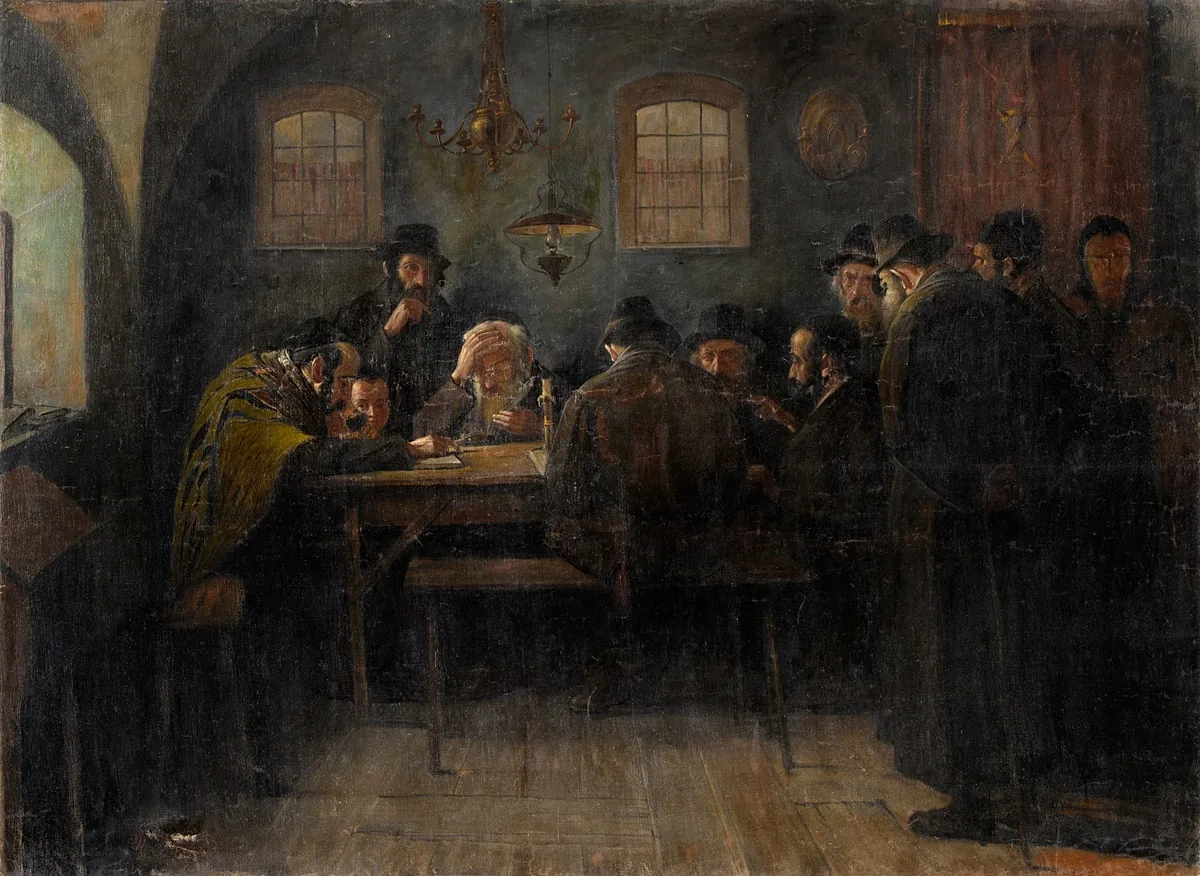
Public domain photograph (copy hosted here via Wikimedia Commons)
Medieval Europe
Church authorities put the Talmud (Judaism's central rabbinic law-and-debate books) on trial in Paris; handwritten copies were burned. The method: selective quotation and hostile framing.
Social feeds
Screenshots of fake or ripped-out "Talmud quotes" still spike whenever the news is hot. Same trick as Paris in 1240: no real page, no context.
Where this lie came from
History of how this lie was built and spread.
First, what the word means: the Talmud is a collection of centuries of rabbinic discussion about Jewish law and ethics: back-and-forth, stories, and often several opinions on the same question. Many observant Jews study it alongside the Hebrew Bible. It is not a single list of commands from God. (Britannica: Talmud)
Attacks on the Talmud go back to medieval Christian Europe. In 1240, Paris held a show trial of the Talmud; thousands of handwritten copies were burned because church authorities said the book insulted Christianity. For hundreds of years after that, campaigns to ban the Talmud kept appearing, often led by Jewish converts who cherry-picked lines and hid the surrounding argument. (Jewish Virtual Library: Disputation of Paris (1240); Britannica: Antisemitism)
The method never changed: pull one sentence out of a long debate, drop who said it and who disagreed, and pretend the whole religion orders Jews to cheat or hurt outsiders. (Britannica: Babylonian Talmud (Bavli))
Today the same lists show up as screenshots on social media. They are usually bad translations, fake quotes, or one rabbi's rejected side comment sold as "what all Jews believe." (Britannica: Talmud; AP News: Antisemitism hub)
Timeline
Main beats in how this lie resurfaced.
1240The Trial of the Talmud in Paris
Nicholas Donin, a Jewish convert to Christianity, presented 35 charges against the Talmud to Pope Gregory IX, accusing it of blasphemy and anti-Christian teaching. A public disputation was held. The Talmud was condemned and thousands of manuscripts were burned in Paris in 1242.
Sources: Jewish Virtual Library: Disputation of Paris (1240)1500sJohannes Pfefferkorn campaigns to destroy Jewish books
Pfefferkorn, a Jewish convert to Christianity, said the Talmud stopped Jews from converting and should be seized. That fight dragged in major scholars and became a famous free-speech battle of the time (the Reuchlin affair).
1700sJohann Eisenmenger publishes Entdecktes Judenthum
In 1700, Johann Eisenmenger published a two-volume attack book. He stacked mistranslated Talmud lines to make Judaism look anti-Christian. Later antisemites kept quoting it for centuries.
1800s to 1900sAnti-Talmudic claims enter secular antisemitic movements
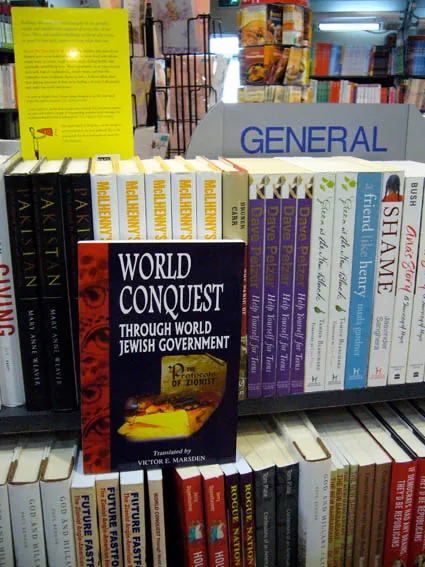
As antisemitism shifted from a religious to a racial and political framework, alleged Talmud quotations were folded into secular conspiracy theories, including those that fed the Protocols of the Elders of Zion (a forged text that pretended to reveal a secret Jewish world plot).
2023-2025War memes recycle text-based myths
News coverage and independent monitoring during the Israel-Hamas war tracked waves of hateful online misinformation about the war, including viral "Talmud quote" images that did not name a real page or use an honest translation.
Sources: AP News: Antisemitism hub; ADL: Antisemitism UncoveredPresent"Talmud quote" lists as evergreen clickbait
Outside any single war, accounts still publish image carousels and threads that claim to expose what "the Talmud really says" about non-Jews.
How it appears today
Typical phrasing and patterns in feeds today. Archived screenshots of real posts, often mixing several tropes, are on Media Examples.
Social media posts listing alleged Talmud quotes about non-Jews being subhuman, typically mistranslated, ripped from context, or entirely fabricated.
Claims that "the Talmud says it is okay to cheat non-Jews," citing passages from legal debates that actually concern narrow commercial law exceptions: minority views within a larger discussion, not universal commands.
Videos and blog posts presenting selected Talmudic passages as evidence of a Jewish supremacist ideology, without explaining what the Talmud is or how legal argumentation works within it.
During the Israel-Hamas war, polling and monitoring found that many people had been exposed to hateful online misinformation about the conflict, including recycled claims about Jewish texts and motives.
Forged texts such as the Protocols of the Elders of Zion claimed to expose secret Jewish instructions; viral "Talmud quote" lists today often serve the same function with screenshots instead of book bindings.
What the record shows
Again, the Talmud is a long, layered argument between rabbis. It includes rejected ideas, thought experiments, and back-and-forth on law and ethics. It is not a single list of orders from God. (Britannica: Talmud)
Pulling one line out and saying "the Talmud teaches" is like printing one U.S. Supreme Court justice's dissent and calling it the final ruling for the whole country. (Britannica: Talmud)
Most viral "Talmud quotes" are: bad translation, a losing side of a debate sold as the whole religion, or a line that is not in the book at all. (Britannica: Talmud)
Later Jewish law codes (written summaries used in real life, not the ancient debate record) spell out duties of honesty, charity, and saving life that apply across faith lines. (Stanford Encyclopedia: Maimonides)
Words like this do not stay online only. Over and over, the same kinds of claims showed up before laws, riots, and violence aimed at Jews. Spotting the repeat pattern is one way to slow it down.
Spot the pattern
Cues to look for
- The post does not name book, page, or chapter. Real study cites where to look.
- The line is sold as a flat command ("you must..."). In the Talmud it is usually one voice in an argument, a what-if, or a view other rabbis rejected.
- The meme traces back to old attack books (for example Johann Eisenmenger's 1700s book of misquoted Talmud lines) or random blogs, not to mainstream scholars.
- Nobody explains how the Talmud works, because a fair explanation would break the meme.
What you can do
Spotting a trope is a first step. Lasting change often needs people you trust, but these actions still help in schools, group chats, and public threads.
- Pause before you share. Ask whether the post relies on a hidden hand, an old accusation in new words, or a screenshot with no primary source.
- Use the Sources drawer on this page. Link or screenshot museum, encyclopedia, or monitor pages when you reply, so the thread is not only opinion.
- Report clear hate when platform rules allow. You are not required to debate strangers; reporting documents the pattern for moderators.
- If someone you know is drifting into conspiracy talk, private, calm conversation from someone they already trust works more often than a public pile-on.
- Teachers and parents: pair one trope here with Jewish life and Holocaust material from trusted history pages such as National Archives: Holocaust-related records or your national museum's classroom pages.
For the research behind this balance of facts, empathy, and action, see What works alongside these pages on the homepage and the methodology section in About.