Holocaust Inversion and Distortion
TL;DR
This trope is false. What follows maps how it resurfaces through history and online, and what the sources show, so you can recognize the script instead of passing the lie along.
Saying Jews "use" the Holocaust for politics, or calling them "the real Nazis," twists genocide history against the people it targeted. That pattern started almost as soon as the war ended.
What the record shows
The Holocaust was the state-organized murder of six million Jews by Nazi Germany and its allies (1933-1945), alongside millions of other victims. It is one of the best-documented events in modern history: Nazi files, trials, mass graves, photos, and survivor testimony all line up.
How this page is built: early framing, history, samples with correction, then pattern cues and actions. That order follows ideas from misinformation "prebunking" (warn people how a tactic works before they meet it at full blast) and from classroom guides that balance facts, human context, and behavior. See What works alongside these pages.
Then vs now
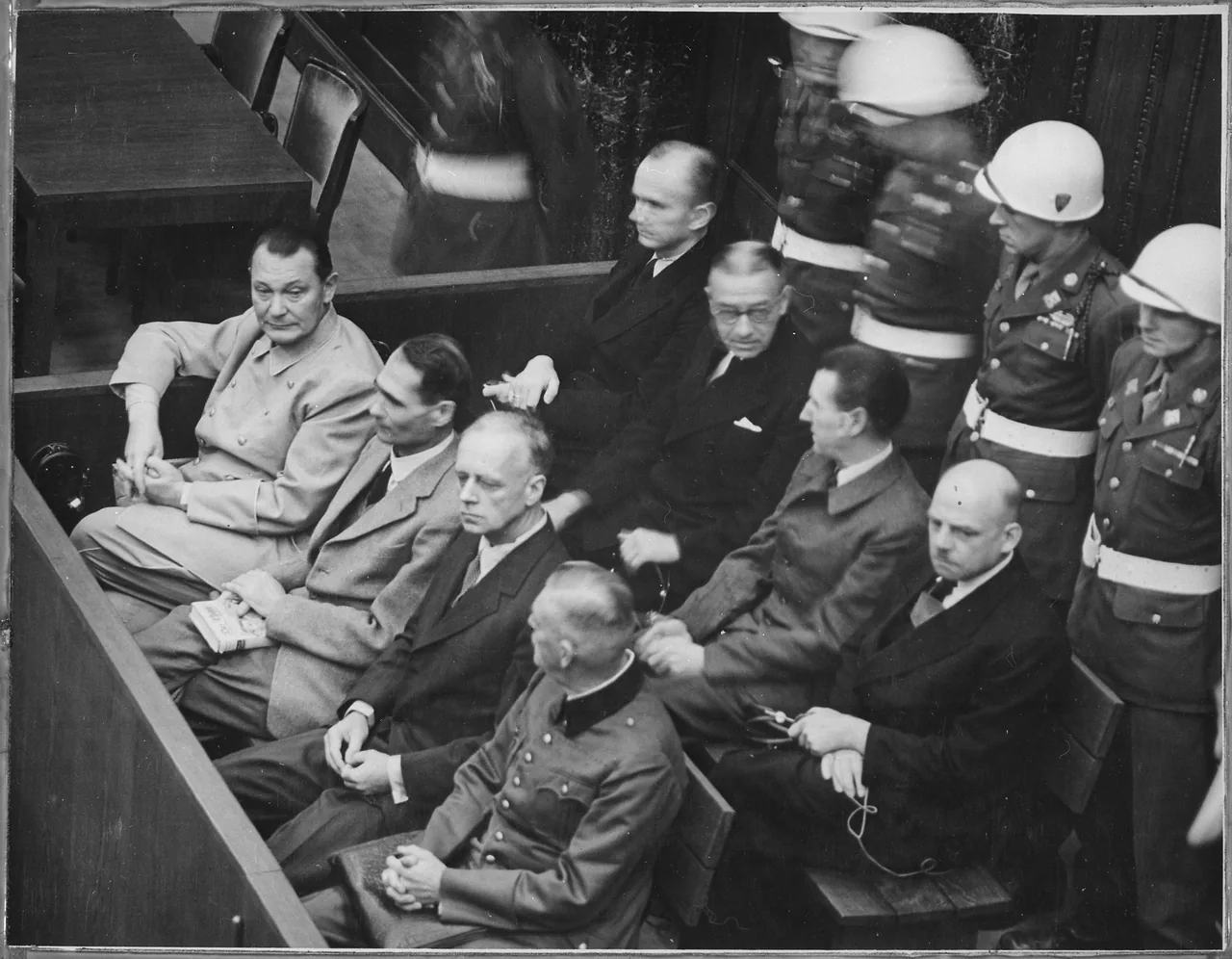
U.S. Army / Wikimedia Commons
Postwar discourse
Right after the Holocaust, some postwar rhetoric cast Germany as the war's chief victim and framed Jewish survivors asking for stolen property back as greedy.
Social feeds
From 2023 on, spikes in Holocaust-inversion memes tracked conflict news. The "Jews weaponize the Holocaust" talking point is older than any one war.
Where this lie came from
History of how this lie was built and spread.
The Holocaust was the Nazi German state's systematic murder of about six million Jews during World War II, alongside millions of other victims. Holocaust inversion means twisting that history: for example saying Jews invented or exaggerated it for gain, calling Jews or Israelis "the real Nazis," or claiming the real lesson is that Jews became oppressors. (Britannica: The Holocaust; USHMM Holocaust Encyclopedia: Introduction to the Holocaust)
These lines started early. After 1945, some voices in Germany and Austria talked as if Germany were the main victim and Jewish survivors asking for justice were greedy. In parts of the Arab world, denial and inversion were used against Israel. Later, far-right figures like David Irving claimed the genocide was exaggerated or fake. (Britannica: The Holocaust; USHMM: Holocaust denial (key dates))
Today the same moves show up online and in protests: denial on one side, signs that call Gaza "the real Holocaust" or merge the Star of David with a swastika on another, plus posts that say Jews "use" the Holocaust to block criticism. Holocaust museums, the United Nations Holocaust remembrance programme, and many education groups document how distortion works, including claims that Jews mainly use the Holocaust for money or politics. (United Nations: Holocaust and the United Nations Outreach Programme; USHMM: Misuse of Holocaust imagery today)
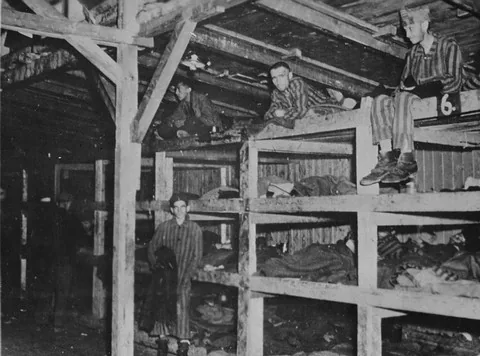
Timeline
Main beats in how this lie resurfaced.
1945 to 1950sPostwar narratives of German victimhood emerge
Right after World War II, some talk in Germany and Austria treated Germans as the main victims of the war and downplayed who had run the camps. When survivors asked for stolen property back, they were painted as greedy.
1960s to 1970sHolocaust denial becomes an organized movement
Writers in France, Britain, and the U.S. wrapped denial in fake scholarship. Their line was often the same: the numbers were inflated or the whole thing was invented to help Jews politically.
1970s to 1980s"Zionism is Nazism" becomes a political slogan
Slogans like "Zionism is Nazism" spread in global politics. In 1975 the UN passed a resolution equating Zionism with racism (that vote was revoked in 1991). The effect was to compare Holocaust victims and their national movement to the people who had tried to wipe them out.
2000sHolocaust inversion enters mainstream protest culture
Protests began using Stars of David merged with swastikas and signs like "the real Holocaust is in Gaza." Those images treat a current conflict as the same as industrial genocide, which erases what the Holocaust actually was.
2023-2025War-related surges in inversion memes
During the October 2023 Israel-Hamas war, monitoring groups and newsrooms reported a sharp rise in posts comparing Israel to the Nazis, treating the Holocaust as a joke, or saying Jews "weaponize" memory of the genocide for politics.
Sources: AP News: Antisemitism hub; ADL: Audit of antisemitic incidents (2023)Present"Weaponize the Holocaust" as evergreen rhetoric
The line that Jews mainly "use" the Holocaust to shut people up still circulates even when the news has moved on.
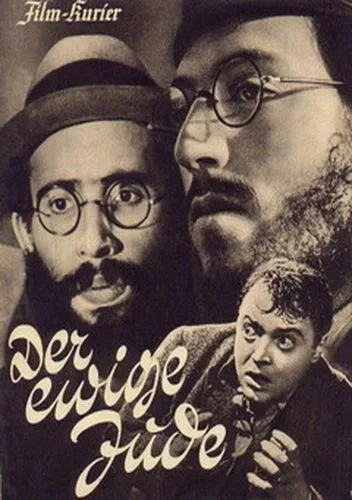
How it appears today
Typical phrasing and patterns in feeds today. Archived screenshots of real posts, often mixing several tropes, are on Media Examples.
Posts that say Jews "use the Holocaust" to shut down criticism of Israel, as if remembering six million murdered people were a PR trick instead of mourning and history.
Images that mash the Star of David together with a swastika, or signs calling Israelis "the new Nazis." That treats people who were targeted for extermination as if they were the exterminators.
The label "Holocaust industry," used to suggest Jewish groups get rich off the genocide and to paint survivors asking for stolen property as money-grubbers.
Flat denial or downplaying: saying the genocide was made up, blown out of proportion, or mainly a political story instead of a documented mass killing campaign.
Comparing today's Israel to Nazi Germany in a way that erases who ran the death camps. Watchdogs often class that as antisemitic when it wipes away Holocaust facts.
What the record shows
The Holocaust was the state-organized murder of six million Jews by Nazi Germany and its allies (1933-1945), alongside millions of other victims. It is one of the best-documented events in modern history: Nazi files, trials, mass graves, photos, and survivor testimony all line up. (Britannica: The Holocaust; Yale Avalon: Nuremberg)
Remembering that genocide is not a "strategy." It is how a community mourns and teaches history after a third of its people were killed within living memory. (United Nations: Holocaust remembrance)
Claims that Jews "use" the Holocaust flip the roles again, like Nazi propaganda that cast Jews as the real threat. Then it was "Germany must defend itself from Jews." Now it is "Jews manipulate others with their victimhood." The second line borrows the logic of the first. (USHMM: Holocaust denial and distortion)
Words like this do not stay online only. Over and over, the same kinds of claims showed up before laws, riots, and violence aimed at Jews. Spotting the repeat pattern is one way to slow it down.
Spot the pattern
Cues to look for
- Remembering the dead is treated like a lobby tactic or a money scheme instead of grief and history.
- Israel or Jews are called "Nazis." That swaps perpetrators and victims and only works if the scale and nature of the Holocaust are erased from the picture.
- Industrial mass murder is compared to a normal political fight, as if scale and intent did not matter.
- Survivors and descendants are framed as "profiting" from genocide. That kind of sentence is almost never used about other victim groups.
What you can do
Spotting a trope is a first step. Lasting change often needs people you trust, but these actions still help in schools, group chats, and public threads.
- Pause before you share. Ask whether the post relies on a hidden hand, an old accusation in new words, or a screenshot with no primary source.
- Use the Sources drawer on this page. Link or screenshot museum, encyclopedia, or monitor pages when you reply, so the thread is not only opinion.
- Report clear hate when platform rules allow. You are not required to debate strangers; reporting documents the pattern for moderators.
- If someone you know is drifting into conspiracy talk, private, calm conversation from someone they already trust works more often than a public pile-on.
- Teachers and parents: pair one trope here with Jewish life and Holocaust material from trusted history pages such as National Archives: Holocaust-related records or your national museum's classroom pages.
For the research behind this balance of facts, empathy, and action, see What works alongside these pages on the homepage and the methodology section in About.