ArticlesAnalysis
Zionism is not the world's only ethnic or religious national movement
Zionism can be debated like any nationalism. But treating Jewish national self-determination as uniquely illegitimate ignores how common ethnic, religious, linguistic, and diaspora-linked national movements are.
About 9 min read
If Zionism means Jewish national self-determination, then the scandal is not that it exists. The scandal is that people talk as if Jews invented nationalism.
Ethnic, religious, linguistic, and diaspora-linked national movements are everywhere. Some are liberal. Some are ugly. Most are mixed. Zionism should be judged honestly too, but not by a rule invented only for Jews.
TL;DR
You can oppose specific Israeli policies without treating Jewish national self-determination as a category error.
The world is full of national movements built around shared peoplehood, language, religion, history, territory, trauma, exile, return, or diaspora. The Jewish version is not immune from critique. It is also not uniquely cursed.
What Zionism is, before the slogans
Start with the standard reference definition:
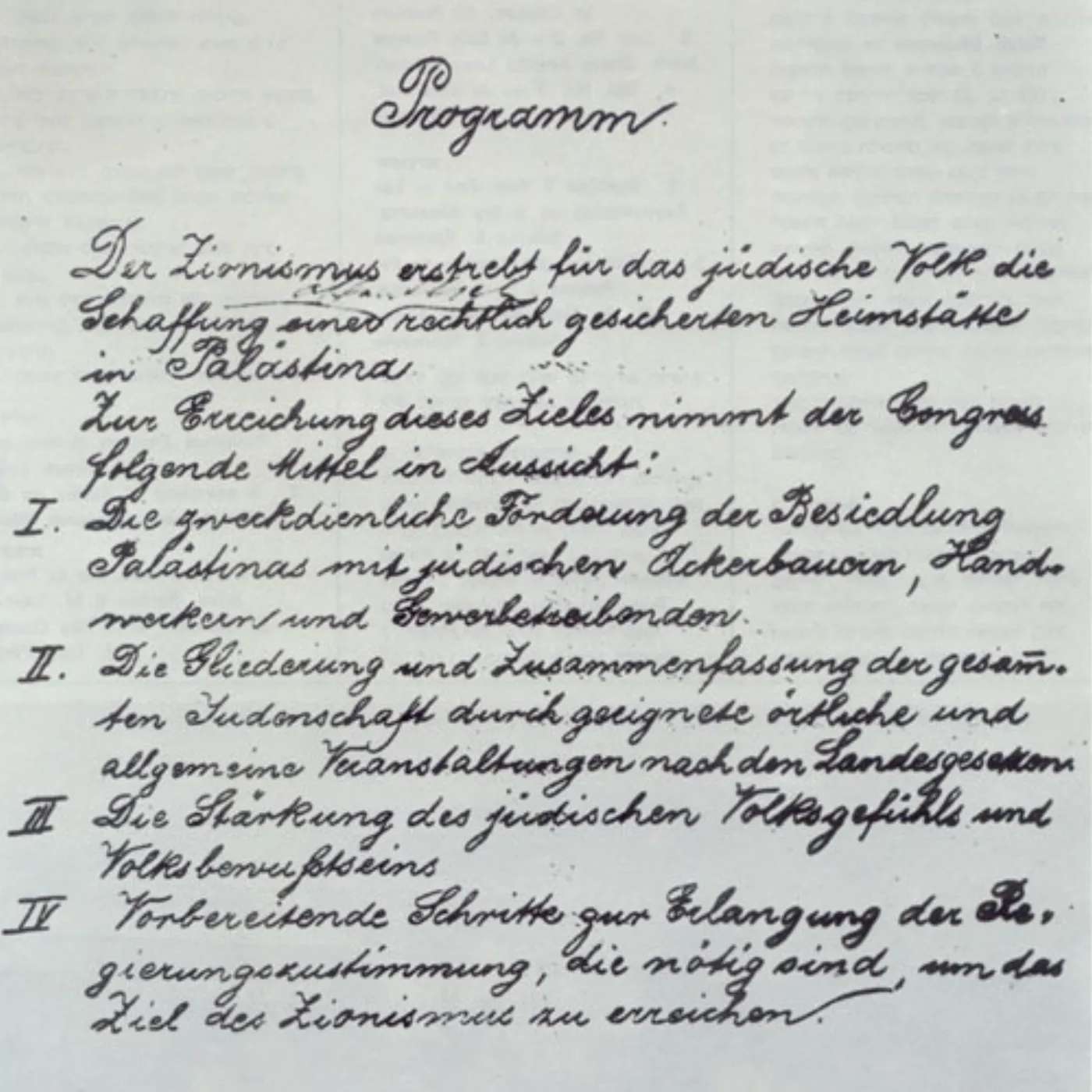
"Zionism, Jewish nationalist movement with the goal of the creation and support of a Jewish national state in Palestine, the ancient homeland of the Jews."
(Encyclopaedia Britannica)
Modern political Zionism emerged in central and eastern Europe in the late 19th century, in response to antisemitism and the failure of assimilation to protect Jews. That definition does not settle every moral or political question. But if the category is "national movement of a people with a claimed homeland," Zionism is not strange. It is one example of a very common modern phenomenon.
National movements are usually particular
Nationalism is rarely just a spreadsheet of residents. It usually involves a story: a people, a language, a religion, a culture, a memory of sovereignty, a loss, a homeland, a diaspora, or a shared future. Britannica's overview of nationalism describes nationalist movements as political or cultural struggles by national groups for statehood, independence, autonomy, rights, or cultural revival. It lists examples including Palestinians, Kurds, Tibetans, Chechens, Bosniaks, Serbs, and Croats.
That list is the point. We do not usually hear that Kurdish nationalism is uniquely racist because it is Kurdish, or that Palestinian nationalism is illegitimate because it is Palestinian, or that Irish national feeling is bigotry because it speaks of the Irish nation. We ask better questions: What rights does it seek? What means does it use? What happens to minorities? What happens to rival claims?
Normal standard
Ask how a national movement behaves: rights, violence, borders, minorities, democracy, and law.
This standard can criticize Zionism sharply.
Double standard
Declare Jewish national self-determination uniquely illegitimate before asking those questions.
This standard singles Jews out as the one people denied the category.
Comparable national movements and state structures
Constitutions and citizenship laws show how ordinary these ties are, not how morally identical every case is.
The strongest objection: Zionism as settler colonialism
The strongest argument against comparison with Armenia, Ireland, or other national movements is not that Zionism is Jewish. It is that modern Zionist settlement and state-building occurred in a land already inhabited primarily by Palestinian Arabs, relied on immigration and outside support, produced Palestinian displacement in 1948, and was followed by occupation and settlement beyond Israel's pre-1967 borders. Any serious defense of Jewish self-determination must confront those facts rather than hide behind analogies.
Those facts justify fierce arguments about dispossession, borders, refugees, military rule, settlements, equality, and Palestinian sovereignty. They do not establish the further proposition that Jewish peoplehood is invented or that Jews, uniquely among peoples with histories of exile and return, are forbidden any national self-determination anywhere. Conduct can be unjust without making the people committing it unreal.
The consistent answer is not to erase one national movement for the sake of the other. It is to demand political arrangements that protect Jewish and Palestinian self-determination, equal civil rights, physical security, and freedom from domination. A theory that recognizes only Palestinian peoplehood erases Jews; a theory that recognizes only Jewish peoplehood erases Palestinians.
How Zionism gets singled out
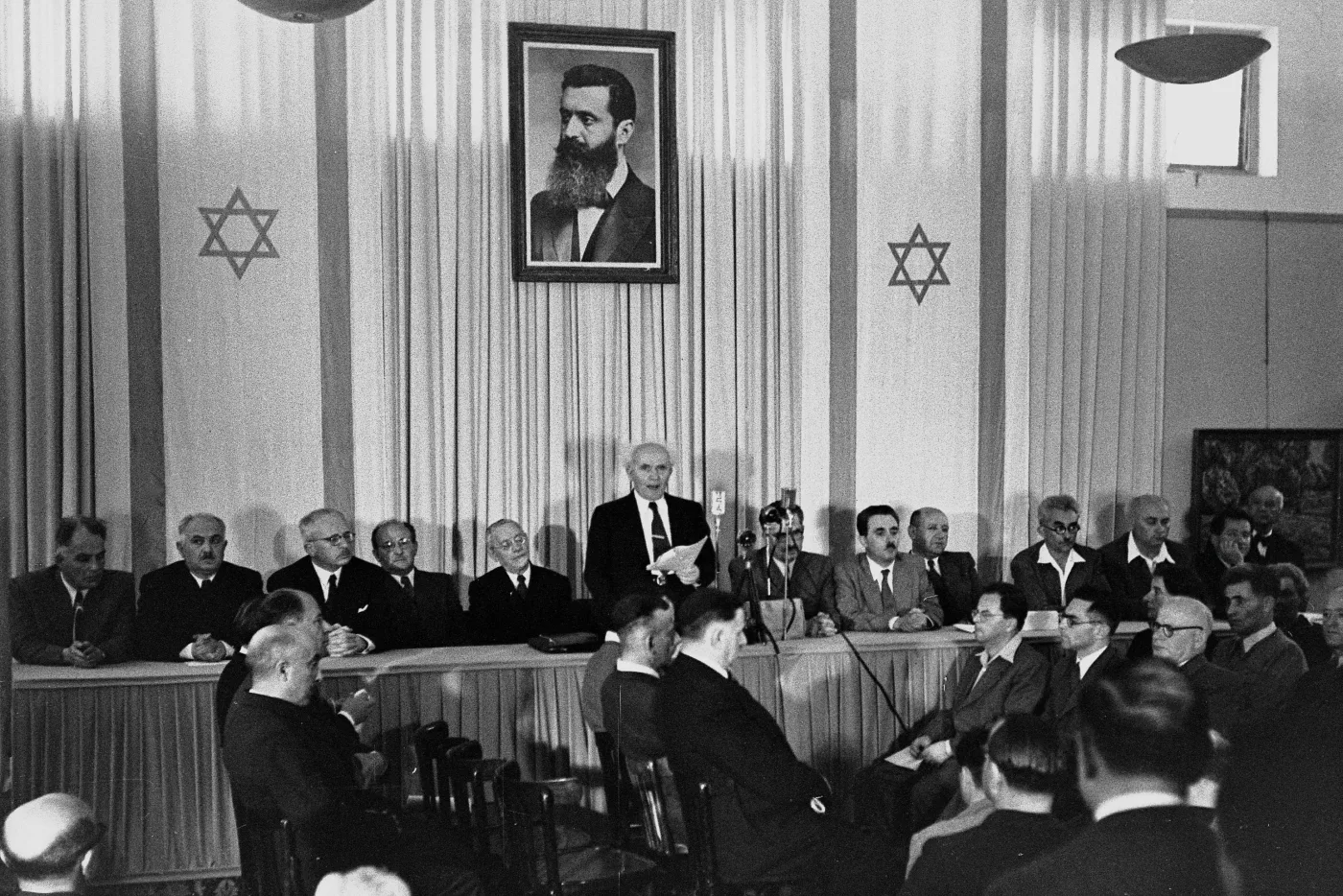
The most famous institutional example was the United Nations General Assembly's 1975 Resolution 3379, which declared that Zionism is a form of racism and racial discrimination. The resolution was revoked in 1991 by General Assembly Resolution 46/86, but the slogan survived because it is politically useful.
There is a reason it sticks. "Zionism is racism" sounds like anti-racism, but often functions as a category ban: Jews may be individuals, a religion, a memory, a victim group, maybe even a culture, but not a nation with a claim to self-determination. Other peoples get nationalist complexity. Jews get moral disqualification.
That categorical disqualification is not merely inconsistent. When it denies Jewish peoplehood, treats Jewish collective safety as inherently illegitimate, or demands that Jews alone depend permanently on the tolerance of surrounding majorities, it is antisemitic. Jewish history records what conditional tolerance meant: residence and rights granted by rulers could be narrowed, revoked, or followed by expulsion. Self-determination emerged as an answer to that vulnerability, not as a plot to escape moral scrutiny.
One standard for both peoples
The honest test is not whether Zionism is national. It obviously is. The honest test is whether the national project is constrained by equal civil rights, minority protections, democratic institutions, fair borders, accountability for violence, and recognition of Palestinian self-determination too.
- Does the state protect equal civil rights for citizens who are not part of the national majority?
- Does it let minorities vote, speak, worship, organize, and challenge the state?
- Does it acknowledge the national rights and human rights of neighboring peoples?
- Does it treat diaspora identity as connection rather than license to erase others?
- Does criticism use the same standards applied to other national movements?
Those questions can be very hard on Israel. They can be hard on Armenia, Pakistan, Greece, Croatia, Ireland, Palestinian nationalism, Kurdish nationalism, and any other national project. Good. That is what a real standard does.
Selected sources
Sources include broad reference works and official constitutional or legal texts showing how common national, religious, ethnic, and diaspora-linked identity claims are.
- Encyclopaedia Britannica: ZionismDefines Zionism as a Jewish nationalist movement and gives historical context.
- Encyclopaedia Britannica: NationalismDefines nationalist movements and lists examples including Palestinians, Kurds, Tibetans, Bosniaks, Serbs, and Croats.
- Constitution of ArmeniaDiaspora ties, repatriation, Armenian language and heritage, and the Armenian Apostolic Holy Church.
- Constitution of CroatiaCroatia as the nation state of the Croatian nation, with protections for minorities and Croats abroad.
- Constitution of IrelandIrish nationhood and special affinity with people of Irish ancestry abroad.
- Greek Citizenship Code translationNaturalization provisions for foreign nationals of Greek origin living abroad.
- Constitution of GreecePrevailing religion and religious-freedom provisions.
- Constitution of PakistanConstitutional text for the Islamic Republic of Pakistan; Islam as state religion and Objectives Resolution.
- German Federal Office of Administration: restoration and restitution citizenshipCitizenship restoration for Nazi persecution victims and descendants.
- Law of ReturnText of the law providing Jewish immigration rights to Israel.
- Basic Law, Israel as the Nation-State of the Jewish PeopleText of the 2018 Israeli Basic Law.
- Encyclopaedia Britannica: Palestinian statehoodHistorical overview of Palestinian self-determination and statehood claims.
- United Nations: Resolution 33791975 General Assembly resolution declaring Zionism a form of racism and racial discrimination.
- Resolution 46/86 summaryRevocation of Resolution 3379.