ArticlesAnalysis
Why Talmud quotes are so easy to rip out of context
The Talmud is not a flat list of Jewish beliefs. It is a layered record of argument, dialogue, minority opinions, hypotheticals, stories, and later interpretation. That makes quote-mining it especially misleading.
About 8 min read
A screenshot says, "The Talmud says..." Then it gives one ugly line, no tractate, no page, no speaker, no surrounding argument, no conclusion, no legal history, and no indication whether the quote is even real.
That is not how the Talmud works. The Talmud is a record of rabbinic argument. It preserves questions, objections, rejected opinions, hypotheticals, minority views, stories, wordplay, and later discussion. Quoting it as if every sentence were a final Jewish commandment is like quoting one lawyer's hypothetical from a court transcript and calling it the law.
TL;DR
If you only remember one thing: a Talmud line without tractate, speaker, argument, and conclusion is not evidence of what Jews believe.
That is why quote-mining the Talmud is especially misleading. A clipped line might be a rejected opinion. It might be a hypothetical. It might be part of a story. It might be one side of a debate. It might be later limited by the very next sentence. It might not be the final law. And in many antisemitic posts, it might not exist at all.
What the Talmud is
The Talmud is built from two main layers: the Mishnah and the Gemara. Britannica describes the Mishnah as an early postbiblical collection of Jewish oral laws. The Gemara is the later rabbinic discussion around that material.
Britannica's overview of the Talmud explains that the two Talmuds consist of explanations, discussions, and decisions around the Mishnah, and that they take the form of a running commentary on it.
"Both take the form of a running commentary on the Mishna."
(Britannica, Talmud and Midrash)
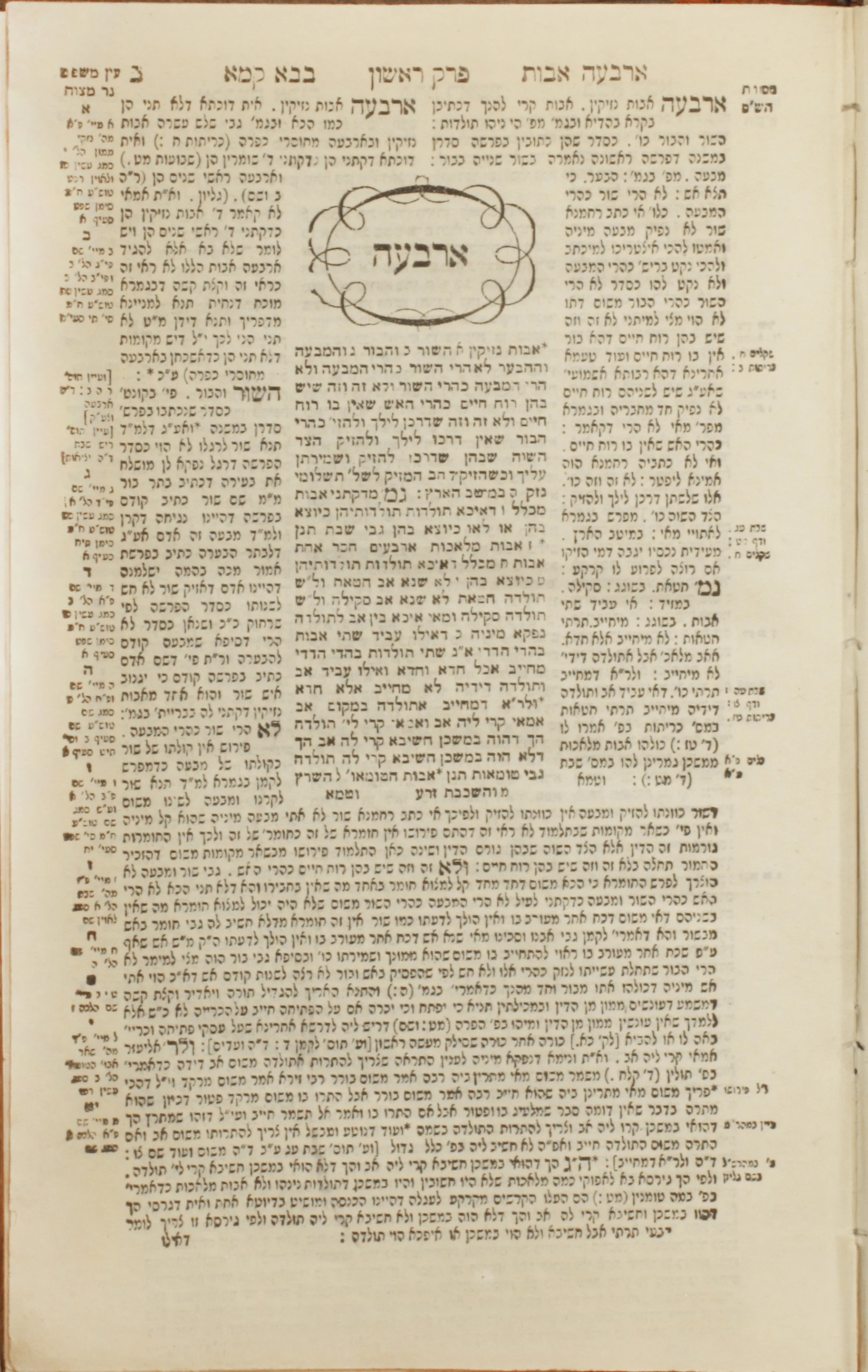
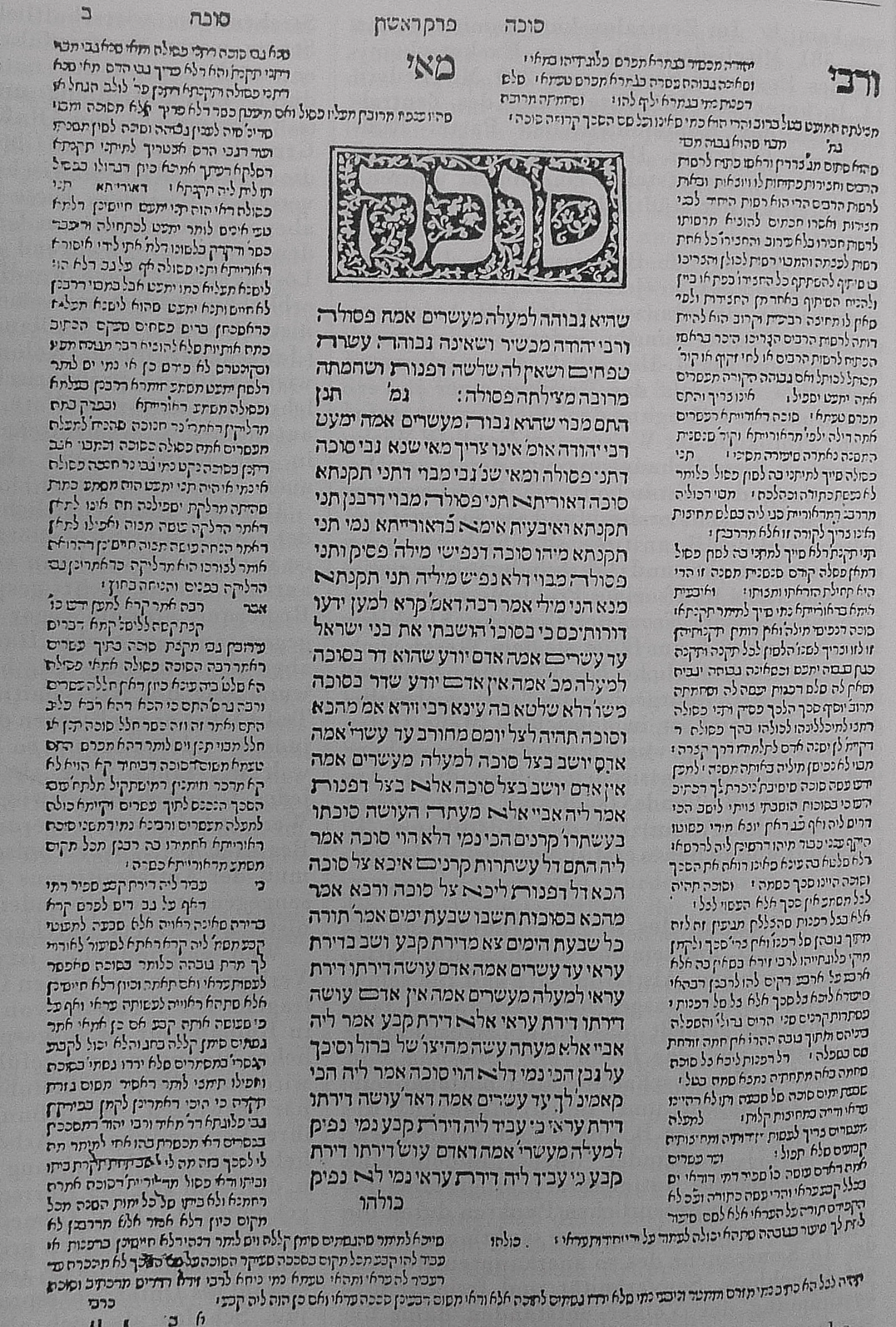
That structure of layered discussion and commentary is the key. The Talmud is not just a book of answers. It is also a book of how Jewish legal and moral reasoning works.
Why clipped Talmud quotes mislead
What the screenshot implies
"The Talmud says X, therefore Jews believe X."
One sentence is treated as the final position of Judaism.
What may actually be happening
A rabbi may be asking a question, quoting an opponent, testing a hypothetical, preserving a rejected view, or recording an ancient dispute.
The meaning depends on the argument around it.
My Jewish Learning's explainer on the Gemara notes that the Gemara includes multiple genres and often weighs multiple opinions against one another, sometimes without presenting a conclusion. That is exactly why a quote can be technically nearby and still deeply misleading.
Sefaria's guide to the digital daf makes the same practical point for readers: the Gemara is complicated, full of quotes from earlier sources and links to later texts. Understanding it requires knowing what source is being used, why it matters, and how it affects later law and ideas.
Worked example: “A gentile who studies Torah is liable to death”
This line from Sanhedrin 59ais real. Rabbi Yoḥanan says that a non-Jew who engages in Torah study is liable to death, reading Deuteronomy's description of Torah as the inheritance of Jacob as an exclusive inheritance. The passage is ancient, exclusionary, and uncomfortable. Honest context does not require pretending otherwise.
"A non-Jew who engages in Torah study is liable to receive the death penalty."
(Rabbi Yoḥanan, Babylonian Talmud, Sanhedrin 59a)
But the viral version usually stops there and turns the line into "Judaism commands Jews to kill non-Jews who read the Torah." The actual page does not say that. The Gemara immediately challenges Rabbi Yoḥanan by citing Rabbi Meir's opposite teaching: a non-Jew who studies Torah is considered like a High Priest. Rabbi Meir bases that claim on Leviticus's inclusive phrase "a person," rather than naming only Israelites.
"Even a non-Jew who engages in Torah study is considered like a High Priest."
(Rabbi Meir, cited as an objection on Sanhedrin 59a)
The Gemara reconciles the two statements by limiting Rabbi Meir's praise to a non-Jew studying the seven Noahide laws understood as applying to humanity generally. That resolution remains restrictive by modern standards. It also proves why the isolated screenshot is deceptive: the page preserves a severe opinion, an objection that praises non-Jewish study, and a limiting resolution. One cropped sentence is not the whole discussion.
Later law adds another necessary layer. Maimonides codified a restriction on non-Jews creating a separate Torah-based religious practice, but explicitly wrote that the person "is not executed." Whatever one thinks of that medieval rule, it is not a command for Jews to kill curious readers. The jump from rhetorical "liability to death" in an ancient debate to a standing Jewish death sentence is false.
What the source establishes
An ancient rabbi states a severe restriction; the Gemara objects with an inclusive teaching, then limits the permitted study to laws understood as applying to non-Jews.
Later codification says the person is not executed.
What the meme invents
"The Talmud orders Jews to kill any gentile who reads Torah."
That claim erases the objection, resolution, legal category, and later ruling.
How to read the missing layers
A responsible reading asks at least five questions.
- Is this a real citation with a tractate and page, or just a meme?
- Who is speaking: the Mishnah, the Gemara, one rabbi, an anonymous voice, a story, or a later commentator?
- Is the line being accepted, challenged, limited, or rejected?
- Is it law, folklore, rhetoric, biblical interpretation, medical assumption, or an ancient courtroom scenario?
- How did later Jewish legal authorities understand it?
That last question matters because even when a passage is real, the Talmud is often the starting point for Jewish law, not the entire legal history. Later codes and responsa frequently clarify, limit, or decide among Talmudic discussions.
"The Gemara is a complicated text, full of quotes from earlier sources as well as implications for later texts."
(Sefaria, Decoding the Digital Daf)
Why antisemites love Talmud quote-mining
Anti-Talmud propaganda is not new. The same trick has been used for centuries: present Jews as secretly hateful, immoral, or dangerous by quoting religious texts in the worst possible way.
The United States Holocaust Memorial Museum preserves Nazi and antisemitic materials that did exactly this. One page from the children's book Der Giftpilz, for example, claimed that the Talmud teaches only Jews are human and non-Jews are animals. The point was not scholarship. It was dehumanization.
A World War II-era handbill used the same tactic, ripping a Talmud quote from context to portray Jews as disloyal. The goal was the same: make Jews look like a hidden enemy, not to explain Jewish law.
Whether the quote is fabricated or real, the method is the same: hide the argument, skip later law, and train the reader to fear Jews instead of understanding a text.
A quick checklist
Before sharing a shocking Talmud quote, run it through the same test antisemitic posts fail:
- Does it give an exact source, like Sanhedrin 59a, or only "the Talmud says"?
- Can the quote be found in a real library or source database such as Sefaria?
- Does the translation match the surrounding page?
- Does the next line challenge or narrow the quote?
- Is the speaker expressing final law, or is the text preserving a dispute?
- Has the quote been traced to anti-Jewish polemics, Nazi propaganda, or modern extremist websites?
The rule is simple: if the claim depends on hiding the context, the context is probably the point.
Selected sources
Sources below explain the structure of the Talmud and document the history of anti-Talmud distortion.
- Britannica: MishnahNeutral overview of the Mishnah as an early compilation of Jewish oral law.
- Britannica: Talmud and Midrash, early compilationsExplains the Talmud as discussion and commentary on the Mishnah.
- My Jewish Learning: Gemara, the essence of the TalmudAccessible explanation of Gemara as layered discussion, argument, and interpretation.
- Sefaria: Decoding the Digital DafGuide to reading a Talmud page with citations, links, and layers of commentary.
- Sefaria: Sanhedrin 59aPrimary text for Rabbi Yoḥanan’s statement, Rabbi Meir’s objection, and the Gemara’s resolution.
- My Jewish Learning: Sanhedrin 59Accessible walkthrough of the competing statements and the restrictive resolution.
- Sefaria: Mishneh Torah, Kings and Wars 10:9Later codification of the restriction, including the explicit statement that the person is not executed.
- USHMM collection item: Der Giftpilz page using a false Talmud claimExample of Nazi children's propaganda attributing dehumanizing claims to the Talmud.
- USHMM collection item: antisemitic handbill with Talmud quote ripped from contextExample of anti-Jewish propaganda using a Talmud quote to promote a disloyalty myth.
- Old Story: Talmud claims tropeOur explainer on how anti-Jewish propaganda misuses Talmud passages.